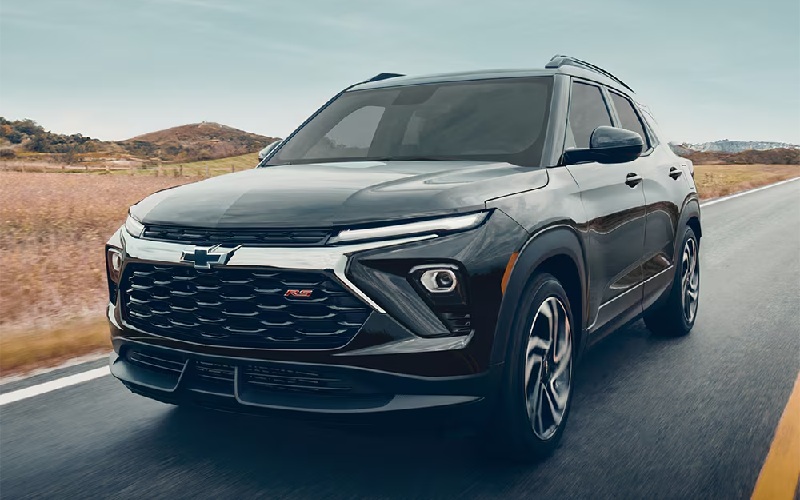


2026 Chevrolet Trailblazer: What Safety Systems Are Standard?
Safety technology has become a central pillar of modern vehicle design, especially in compact SUVs, where versatility and everyday usability are key priorities. The Chevrolet Trailblazer integrates a wide range of standard safety systems that aim not only to protect occupants in the event of a collision but also to actively reduce the likelihood of […]
Safety technology has become a central pillar of modern vehicle design, especially in compact SUVs, where versatility and everyday usability are key priorities. The Chevrolet Trailblazer integrates a wide range of standard safety systems that aim not only to protect occupants in the event of a collision but also to actively reduce the likelihood of accidents.
These systems combine sensors, cameras, electronic control units, and structural engineering to create a layered safety approach. Rather than relying on a single feature, the Trailblazer uses multiple interconnected systems that monitor driving conditions, assist the driver, and intervene when necessary. Understanding how these systems function provides a clearer view of how safety is engineered into the vehicle.
Active Safety Systems Overview
Active safety systems are designed to prevent accidents by continuously monitoring the vehicle’s surroundings and assisting the driver.
Core Capabilities
- Detect potential hazards
- Provide warnings to the driver
- Automatically intervene when necessary
These systems rely on a network of sensors and control modules that process data in real time.
Forward Collision Alert
Forward collision alert is a primary safety feature that helps detect potential frontal impacts.
System Operation
- Uses a forward-facing camera to monitor the road ahead
- Detects vehicles or obstacles within a certain distance
Warning Mechanism
- Visual alerts displayed in the instrument cluster
- Audible warnings to prompt driver reaction
This system helps reduce the likelihood of rear-end collisions, particularly in urban traffic conditions.
Automatic Emergency Braking
Automatic emergency braking builds on forward collision alert by actively applying the brakes if necessary.
How It Works
- Evaluates closing speed between the vehicle and an object ahead
- Determines if a collision is imminent
Intervention
If the driver does not respond in time, the system:
- Applies braking force automatically
- Reduces vehicle speed or prevents impact at lower speeds
This feature is particularly effective in stop-and-go traffic.
Lane Keeping Assistance
Lane keeping assistance helps maintain the vehicle’s position within its lane.
Detection System
- Uses a camera to identify lane markings
- Monitors vehicle alignment relative to those markings
Steering Input
If the vehicle begins to drift unintentionally:
- The system provides gentle steering corrections
- Alerts the driver if further action is needed
This reduces the risk of unintentional lane departures.
Lane Departure Warning
Lane departure warning complements lane keeping assistance.
Function
- Alerts the driver when the vehicle drifts out of its lane without signalling
Alert Types
- Visual notifications
- Audible or haptic warnings
This system serves as an early warning layer before corrective action is required.
Rear Vision Camera
The rear vision camera provides visual assistance when reversing.
System Features
- Displays a live image of the area behind the vehicle
- Includes guidelines to assist with positioning
Benefits
- Improved visibility when backing up
- Reduced risk of collisions with obstacles
This is particularly useful in tight parking spaces or areas with limited visibility.
Electronic Stability Control (ESC)
ESC is a fundamental system that helps maintain vehicle stability.
Monitoring Function
- Tracks steering input and vehicle direction
- Detects loss of traction or skidding
Corrective Actions
- Applies braking to individual wheels
- Adjusts engine power
This helps the driver maintain control during sudden maneuvers or slippery conditions.
Traction Control System (TCS)
Traction control works alongside ESC to prevent wheel spin.
Operation
- Detects when wheels lose grip during acceleration
- Reduces engine power or applies braking
Benefits
- Improved traction on wet or uneven surfaces
- Enhanced acceleration stability
Anti-lock Braking System (ABS)
ABS prevents wheel lockup during hard braking.
Function
- Rapidly modulates brake pressure
- Maintains wheel rotation
Advantages
- Allows steering control during braking
- Reduces stopping distance in certain conditions
ABS is a core component of modern braking systems.
Airbag System
The Trailblazer includes a comprehensive airbag system designed to protect occupants during a collision.
Airbag Types
- Front airbags
- Side-impact airbags
- Curtain airbags
Deployment Process
Sensors detect impact forces and deploy airbags within milliseconds.
Protective Role
- Absorbs impact energy
- Reduces injury risk
Structural Safety Design
Beyond electronic systems, the vehicle’s structure plays a key role in safety.
Reinforced Frame
- High-strength materials in the passenger cell
- Designed to resist deformation
Crumple Zones
- Absorb and dissipate impact energy
- Reduce force transmitted to occupants
This design enhances occupant protection during collisions.
Sensor and Camera Integration
Safety systems rely on a network of sensors and cameras.
Components
- Forward-facing camera
- Wheel speed sensors
- Brake system sensors
Data Processing
Information is processed by control units that make real-time decisions, enabling rapid system response.
System Coordination
Safety features in the Trailblazer work together.
Integrated Operation
- Collision alerts trigger braking systems
- Stability control interacts with traction systems
- Sensors share data across multiple modules
Redundancy
- Multiple systems monitor similar conditions
- Backup mechanisms ensure reliability
This layered approach improves overall safety performance.
Driver Awareness and Assistance
In addition to automated systems, the Trailblazer includes features that enhance driver awareness.
Alert Systems
- Seatbelt reminders
- Visual and audible warnings
Purpose
- Encourage attentive driving
- Reduce the risk of human error
These systems complement active safety technologies by focusing on driver behaviour.
Real-World Applications
The effectiveness of safety systems becomes clear in everyday scenarios.
Urban Driving
- Automatic braking reduces low-speed collisions
- Rear vision camera assists in parking
Highway Driving
- Lane keeping assistance reduces drift
- Stability control maintains directional control
Adverse Conditions
- Traction control improves grip
- ESC enhances stability on slippery surfaces
Maintenance Considerations
Safety systems require proper maintenance to function correctly.
Key Areas
- Sensor calibration
- Camera cleanliness
- Brake system condition
Importance
Ensuring that sensors and components are functioning properly is essential for accurate system performance.
Driving Experience and Safety Integration
The presence of these systems influences how the vehicle behaves on the road.
Characteristics
- Increased driver confidence
- Reduced likelihood of accidents
- Enhanced control in challenging conditions
The integration of multiple safety systems creates a driving environment that prioritizes awareness and stability.
2026 Chevrolet Trailblazer FAQ Section
What safety systems are standard in the 2026 Chevrolet Trailblazer?
- Standard systems include forward collision alert, automatic emergency braking, lane-keeping assistance, lane departure warning, electronic stability control, and a rear-view camera.
How does automatic emergency braking function?
- It detects potential collisions and applies the brakes automatically if the driver does not respond in time.
Is lane-keeping assistance included as standard?
- Yes, lane keeping assistance is included and helps maintain the vehicle’s position within its lane.
What is the purpose of electronic stability control?
- It helps maintain vehicle control by adjusting braking and engine power when it detects loss of traction or skidding.
Are airbags included in the standard safety system?
- Yes, the Trailblazer includes multiple airbags designed to protect occupants during a collision.
Disclaimer: Content contained in this post is for informational purposes only and may include features and options from US or internacional models. Please contact the dealership for more information or to confirm vehicle, feature availability.